
Chamber concert as part of the 25th "Stars Promote" Festival
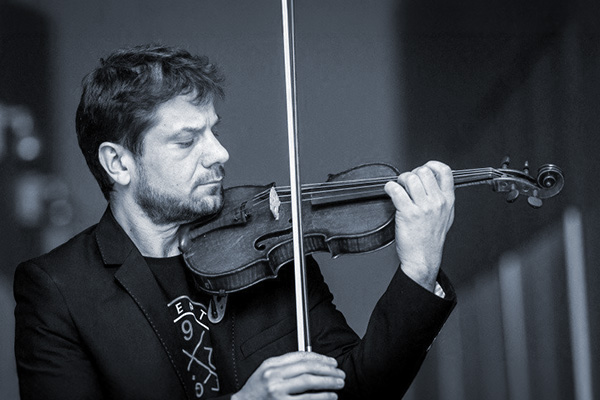
Maciej Łabecki violin
Martyna Serwin violin
Weronika Porzezińska violin
Gabriela Małachowska violin
Aleksandra Łysiak piano
Mozart’s Violin Concerto No. 5 in A Major, K. 219, often referred to as the “Turkish” Concerto, reflects the young composer’s cosmopolitan outlook and masterful command of form. Following the orchestral exposition, the solo violin enters with an unexpected change of tempo. Only when the opening Allegro returns does it become clear that the musical idea introduced by the orchestral tutti serves merely as an accompaniment to the principal theme, presented by the soloist. This surprising device lends a characteristic brilliance and colour to a movement otherwise shaped according to the principles of Classical sonata form.
The second movement of Karłowicz’s Violin Concerto, Op. 8, “approaches the style of Bach’s violin cantilena”, while the third is “distinguished by wit and a rhythm full of vigour”. Written for the composer’s violin teacher, Stanisław Barcewicz, the work enjoyed considerable success with audiences and critics from its first performance. Its “subtle and fresh” orchestral accompaniment and brilliant solo part, rich in elaborate figurations and multiple stopping, prompted a critic writing in Przegląd Tygodniowy after the Warsaw performance of 28 November 1904 to compare Karłowicz to Vieuxtemps. In his Fantaisie brillante, Op. 20, Wieniawski drew on a varied selection of themes from Gounod’s opera Faust, deliberately avoiding its most familiar passages. The work encompasses three contrasting thematic spheres: Romantic, demonic and dance-like. These are combined within a four-section structure whose narrative is shaped by contrasts of expression and tempo. Wieniawski used his virtuosity with great skill to emphasise the changing moods of the music, while also expanding the technical possibilities of the violin. Although the Fantaisie was not initially received with enthusiasm, it remains one of his most frequently performed compositions. Beethoven’s Violin Sonata No. 4 in A Minor, Op. 23, differs markedly from the three preceding works and anticipates a new relationship between violin and piano. The two instruments function as equal partners within a tightly constructed musical structure shaped by striking dynamic contrasts. Particularly remarkable is the second movement: a slow scherzo with a trio developed in the manner of a fugue. Dedicated to the celebrated violinist Pablo de Sarasate, Camille Saint-Saëns’s Introduction and Rondo Capriccioso, Op. 28, is a work of pure virtuosity. Its brilliant character is already apparent in the atmospheric introduction, which leads into the Rondo’s expansive and energetic refrain, interspersed with more lyrical episodes. Concluding with a dazzling coda, the composition has long held a permanent place in the core violin repertoire as a true concert showpiece, full of colour, vitality and spirited character.
PERFORMERS
